Amla vs Synthetic Vitamin C: Which One Should You Choose?
In today’s fast-paced lifestyle, maintaining immunity has become more important than ever. From tablets to powders, vitamin C supplements are everywhere-but so are natural alternatives that people are rediscovering. One such option is amla, often considered a natural vitamin C drink India is turning back to for long-term wellness.
But the real question is-should you depend on synthetic supplements, or switch to something natural?
The Real Problem: Convenience vs Real Nutrition
Most people today are not lacking awareness-they are lacking consistency.
We know vitamin C is important for:
- Immunity
- Skin health
- Daily energy
But instead of building habits, we often rely on quick fixes like tablets.
This creates a gap between temporary support and sustainable health.
What is Synthetic Vitamin C?
Synthetic vitamin C (ascorbic acid) is lab-made to replicate the structure of natural vitamin C.
✔ What works:
- Easy to consume
- Measured dosage
- Quick availability
❌ What’s missing:
- No supporting nutrients
- Limited absorption support
- Not designed for holistic wellness
It solves a problem-but only partially.
Why Amla is More Than Just Vitamin C
Amla, or the indian gooseberry drink base, offers much more than just one nutrient.
It comes with:
- Natural antioxidants
- Bioactive compounds
- Better nutrient synergy
This means your body absorbs and uses it more effectively compared to isolated supplements.
And this is where amla juice for immunity becomes a long-term habit rather than a temporary solution.
Amla vs Synthetic Vitamin C: Practical Comparison
🔬 Absorption
Synthetic → Direct but isolated
Amla → Supported by natural compounds
🌿 Nutritional Value
Synthetic → Single nutrient
Amla → Multi-nutrient support
⚖️ Daily Use
Synthetic → Short-term use
Amla → Suitable for daily lifestyle
🌱 Lifestyle Fit
Synthetic → Reactive approach
Amla → Preventive approach
The Bigger Shift: Natural Wellness is Rising
People are slowly moving away from artificial solutions and toward natural alternatives.
Why?
Because natural options:
- Fit into daily routines
- Support long-term health
- Feel sustainable
That’s why categories like:
- sugar free health drink india
- ayurvedic energy drink
are gaining attention-not as trends, but as lifestyle choices.
Where Do Other Ingredients Fit In?
Modern wellness is not about one ingredient alone.
For example:
- Amla supports immunity
- Beetroot supports energy
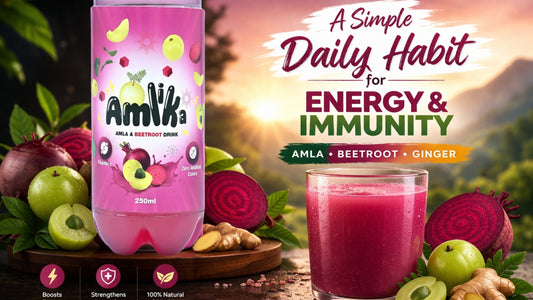
Together, amla beetroot juice benefits create a more balanced daily drink.
This is why combinations like a beetroot health drink or even an amla sparkling drink format are becoming more popular-they blend tradition with convenience.
Making the Right Choice for Your Routine
If your goal is:
- Quick fix → Supplements can help
- Long-term wellness → Natural options are better
The key is not to depend on shortcuts but to build sustainable habits.
Bringing Natural Wellness into Daily Life
Fresh preparation is not always practical.
That’s where ready-to-consume options help bridge the gap.
A well-crafted amla-based drink can:
- Deliver consistent nutrition
- Fit into busy routines
- Replace artificial supplements over time
Without compromising on simplicity.
Final Thoughts
The choice between amla and synthetic vitamin C is not about right or wrong-it’s about what works for your lifestyle.
One gives isolated convenience.
The other offers complete, natural balance.
As awareness grows, more people are shifting toward natural alternatives that align with their daily habits. This is where choosing the Best Amla Juice becomes important-not just for nutrition, but for consistency.
Tags:
Previous
10 Science-Backed Amla Juice Benefits for Skin, Immunity and Digestion
Next
Natural Detox Drinks in India: 10 Healthy Juices for Daily Hydration